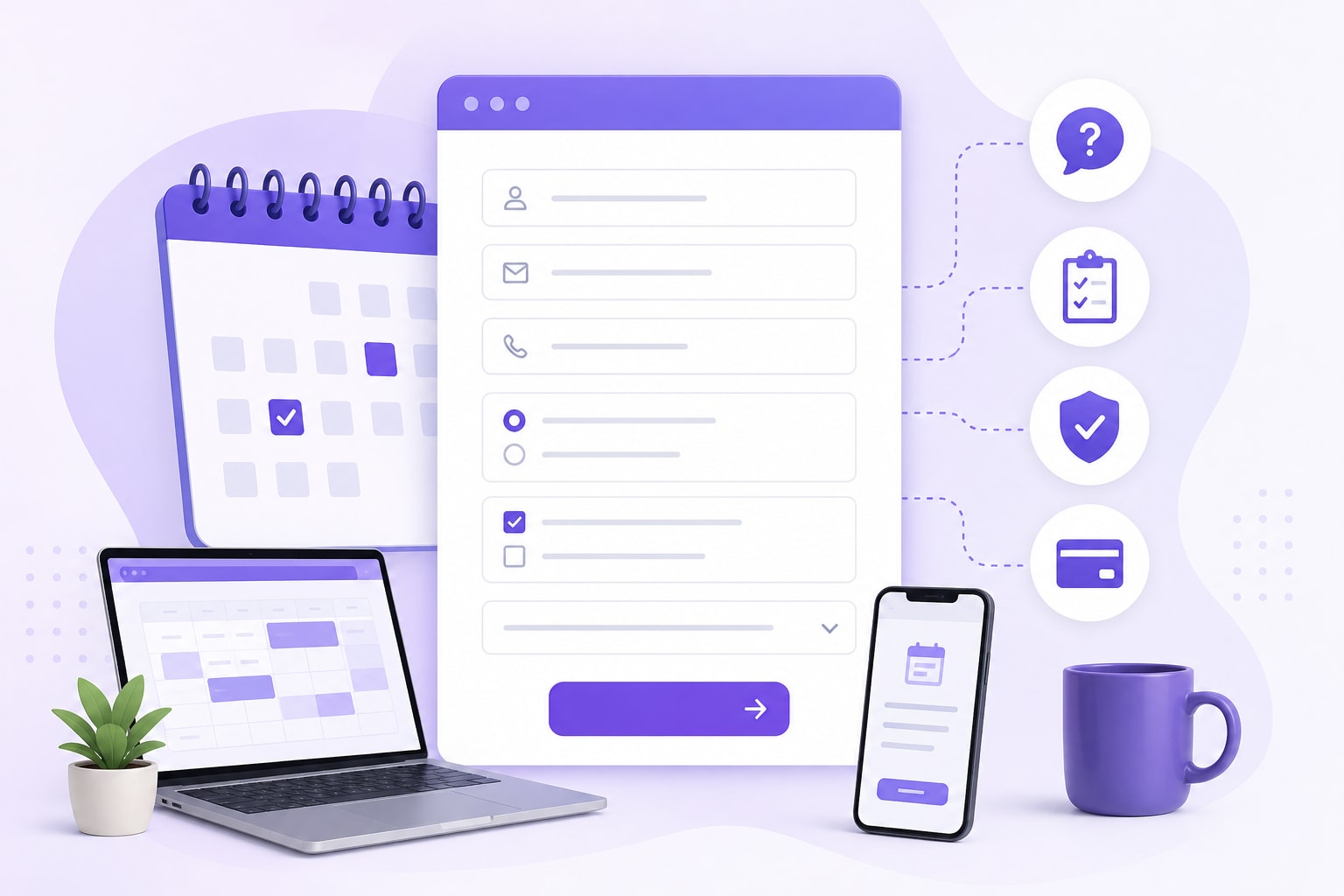
If you run workshops, events, classes, tours or appointment-based services, you've probably dealt with this problem before.
A customer completes your online booking form, pays for the service, and everything looks good.
Then the real admin work begins.
You send another email asking them to:
- Provide contact details
- Share dietary requirements
- Confirm experience level
- Acknowledge important information
- Fill out another booking form
- Complete waiver questions
- Provide emergency contact information
- Confirm their preferred date
- Answer questions related to the service they booked
Some customers respond immediately.
Others completely miss the email.
The result? More back and forth communication, more reminders, delayed scheduling appointments, missing booking details and unnecessary administration for your business.
The good news is that modern booking questions and conditional logic can solve most of these problems before they even happen.
Instead of relying on multiple forms, separate emails and disconnected tools, businesses can now collect all the necessary information directly during the booking process.
And customers prefer it too.
Why Traditional Booking Forms Create Problems
Many businesses still use a very basic booking form template that only collects:
- Name
- Email address
- Phone number
- Preferred date
- Payment details
After the booking is confirmed, they then send separate forms asking for additional details.
The problem is simple:
customers are most engaged during the online booking process itself.
Once the booking is complete, attention drops quickly.
People forget to reply.
Emails get buried.
Forms are ignored.
Important information gets missed.
This creates:
- Delays
- Double bookings
- Missing customer information
- Confusion
- More back and forth
- Scheduling issues
- Poor booking experience
For businesses handling appointment booking, tour bookings, workshops, retreats or client appointments, this can become a major operational issue very quickly.
Why Smart Booking Questions Matter
Modern online booking forms are no longer just about collecting payment or reserving services.
They are part of the customer journey.
A well-designed booking process helps businesses:
- Collect information upfront
- Reduce admin work
- Improve conversion rates
- Prevent scheduling conflicts
- Create a more professional booking experience
- Gather all the details needed before the appointment or event
Instead of chasing customers for forms later, businesses can use booking questions to collect important information while the customer is already engaged.
This creates a smoother scheduling process for everyone involved.
Collect the Right Information at the Right Time
One of the biggest mistakes businesses make is asking every customer every question.
Long forms overwhelm customers.
But conditional logic changes this completely.
Instead of showing one single booking form to everyone, businesses can create personalised booking flows depending on the service selected or the answers provided.
For example:
A Gardening Workshop
The booking form might ask:
What topic are you most interested in?
- Vegetable gardening
- Flower gardening
- Indoor plants
Depending on the answer, customers are automatically shown different follow-up questions.
Someone interested in indoor plants may be asked:
- How many indoor plants do you currently own?
While someone booking a vegetable gardening workshop may instead see:
- What vegetables would you like to learn to grow?
This keeps the booking form mobile friendly, shorter and much easier to complete.
Reduce Back and Forth Communication
Every additional email creates another opportunity for delays.
Businesses often spend hours:
- Following up on missing forms
- Asking for information twice
- Confirming booking details
- Clarifying customer requirements
- Answering repeated questions
This creates unnecessary admin work for both businesses and customers.
By collecting all the information during the booking process itself, businesses can dramatically reduce back and forth communication.
Customers can:
- Book appointments
- Select a specific service
- Provide contact information
- Share special requests
- Confirm availability
- Answer important questions
- Accept acknowledgements
- Complete payment
All in one place.
Gather Important Acknowledgements Before Booking
Many businesses need customers to confirm important information before attending.
For example:
- Health and safety notices
- Outdoor activity requirements
- Equipment requirements
- Participation conditions
- Photography notices
- Age restrictions
- Cancellation information
- Physical activity warnings
Instead of hoping customers read a follow-up email, booking questions allow businesses to present this information directly during the booking process.
For example:
☑ I understand this workshop takes place outdoors.
☑ I understand suitable footwear is required.
☑ I understand gardening tools will be used during the session.
This ensures customers actively acknowledge key details before confirming the booking.
Terms and conditions can also be made mandatory separately during checkout, helping businesses ensure customers accept important policies before payment is completed.
Improve the Booking Experience for Customers
Customers notice when a booking process feels organised and professional.
A streamlined online booking form gives customers confidence that:
- The business is prepared
- The scheduling process is efficient
- Their information is being handled correctly
- The experience has been carefully designed
Instead of feeling like an administrative task, the booking becomes part of the overall customer experience.
This is especially important for:
- Workshops
- Coaching services
- Events
- Retreats
- Fitness classes
- Appointment forms
- Tour bookings
- Group bookings
A professional booking experience can directly improve conversion rates because customers are more likely to complete forms that feel simple and relevant.
Collect Better Customer Information
Different businesses need different types of information.
Conditional booking questions make data collection far more flexible.
Examples include:
Workshops
- Experience level
- Learning goals
- Materials required
Fitness Classes
- Injuries
- Fitness level
- Medical considerations
Children's Activities
- Parent contact details
- Child age
- Emergency information
Coaching Services
- Goals
- Challenges
- Preferred outcomes
Tours and Experiences
- Accessibility needs
- Group size
- Special requests
Rather than using generic form templates, businesses can create customised booking forms designed around their specific needs.
Avoid Double Bookings and Scheduling Issues
Many online booking tools help businesses manage scheduling, availability and customer communication in one place.
This helps businesses:
- Manage bookings more efficiently
- Reduce scheduling confusion
- Prevent missing customer information
- Keep all booking details organised
- Create a smoother booking experience
When combined with booking questions and conditional logic, businesses can collect the right information before the booking is confirmed instead of relying on follow-up emails or separate forms later.
This creates a more organised process for both businesses and customers while reducing unnecessary admin work.
One Booking Form Can Replace Multiple Tools
Many businesses rely on:
- Separate questionnaires
- Follow-up emails
- PDF forms
- Survey tools
- Waiver software
- Scheduling platforms
This often creates disconnected workflows.
Modern booking systems with advanced features like Baluu can replace many of these tools by allowing businesses to:
- Easily create customised booking flows
- Collect payment
- Accept payments online
- Schedule appointments
- Gather customer information
- Use conditional logic
- Create professional forms
- Manage bookings in one place
This creates a far more efficient process for both businesses and customers.Simpler Booking Forms Lead to Better Results
The best booking forms are not necessarily the longest ones.
They are the forms that:
- Ask relevant questions
- Collect essential details
- Feel easy to complete
- Avoid unnecessary friction
- Adapt to customer answers
The goal is not to collect more information.
The goal is to collect the right information.
A shorter, smarter online form often performs much better than a generic booking form template filled with unnecessary form fields.
Build a Better Booking Process
Your booking process should do more than reserve services.
It should help your business operate more efficiently while improving the customer experience at the same time.
By using booking questions, conditional logic and customised online booking forms, businesses can:
- Save time
- Reduce admin work
- Improve scheduling
- Collect necessary details upfront
- Reduce back and forth communication
- Improve conversion rates
- Create a more professional customer journey
Most importantly, customers can complete everything in one smooth process instead of being chased for forms later.
And that benefits everyone.
If you want to create smarter booking forms with conditional logic, personalised questions and advanced booking features, Baluu Booking Questions feature make it easy to collect the information you need before the booking is confirmed.
Written by
Ruta Jogminaite
Expert in booking systems and appointment-based business optimization.
More to explore
Continue Reading

Why Choose Baluu? Flexible Booking Software With Real Human Support
Discover why Baluu is a flexible online booking system for classes, courses, appointments and events, with powerful booking tools, flexible pricing and real human support to help you get set up and start taking bookings.

How to Take Bookings for a 6-Week Course or Term of Classes
Learn how to take bookings for a 6-week course or term, from full-course and drop-in options to pro-rata pricing, payments, capacity and customer communication.

How to Get Your Business Found in ChatGPT and AI Search?
Learn how to improve your business’s visibility in ChatGPT and AI search with clear website content, SEO, reviews and accurate business information.